August/September 2026
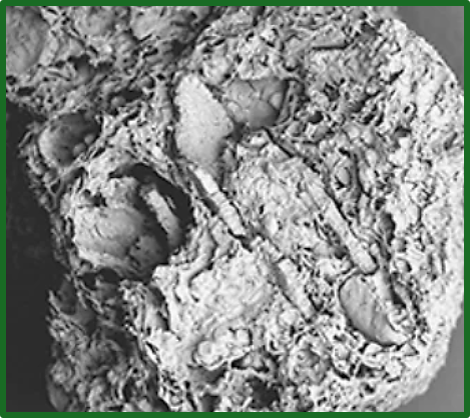
Food fragment from 70,000 years ago, Shanidar site, Northern Iraq:
Cooking in caves: Palaeolithic carbonised plant food remains from Franchthi and Shanidar, (Antiquity, Vol. 97, Issue 391, 2023.) Charred food remains showed “they soaked, pounded, and mixed wild seeds, lentils, and pistachios into flatbread-like cakes”. Always seen as a meat heavy culture, clearly there is so much more to learn about their life ways. Neanderthals and their human cousins carried and shared enormous amounts of environmental information over thousands of years. A deep knowledge of botany and biology would have been crucial to survival. What was poisonous? What was medicinal? What survived over winter when stored? Tending the Wild by Professor K. Anderson, is a more modern analysis of millennially acquired knowledge transmitted over generations.
Jomon genomics reveal cold adaptation in Upper Paleolithic hunter-gatherers of eastern Eurasia.
(Science Advances, Vol 12, No. 33 Aug. 2026). Is human culture the arbiter of how we survive? Has it replaced natural selection? Does it matter to modern humans who do not have to worry about adapting to a new environment? We may not have all the answers we think we do. Here, in a very technical article, the authors argue that in the Late Pleistocene, the Jomon people of Japan, show “diverse biological adaptations—broadly categorized as metabolic, isolative, or hypothermic”. Further, the authors noted the early Jomon “carried notably higher frequencies of cold adaptation variants” than present day East Asians.
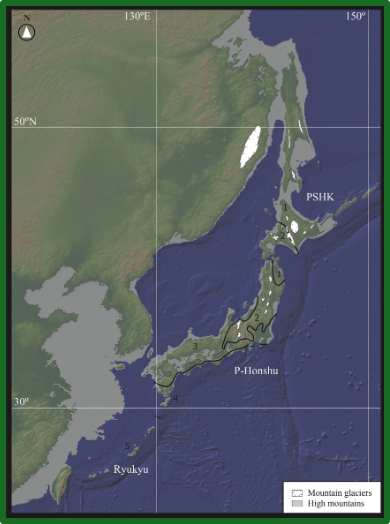
Japan Last Glacial Maximum
Why and when did some human behavior expand?
Once upon a time, archaeologists (particularly European archaeologists) argued that modernity, complexity and innovation began post African migrations, in Europe. However, we know humans in Africa were using ash and insect resistant plants over 200,000 YA, fire hardened stone 164,000 YA, ochre in 90,000 YA, decorated ostrich egg containers perhaps 60,000 YA, and drawing on cave walls in Sulawesi, Indonesia, 51,000 YA. The rapid growth in cultural knowledge and cultural sharing among groups across continents and across time, suggests these cultural changes aided humans in adapting to rapid environmental changes.
Expansion of tool kits and complexity in behavior began in Africa, Europe and Asia by 40,000 to 50,000 YA, although complexity in behavior began much earlier. Why? Population growth? Climate change?
Fluctuating green corridors through Saudi Arabia and other once arid places showing lush growth periodically with climate change, encouraged growth, population, cultural exchanges, trade, along with increasing complex language. Why painting on walls? Is it a new way to communicate? … “These figurative and geometric images were imbued with a meaning to an audience within the society and culture of the Palaeoillustrators. This meaning, like today, goes beyond an act of mere decoration and has a level of intent that we can examine… (D. Wood, 2023, U. of Dundee.)
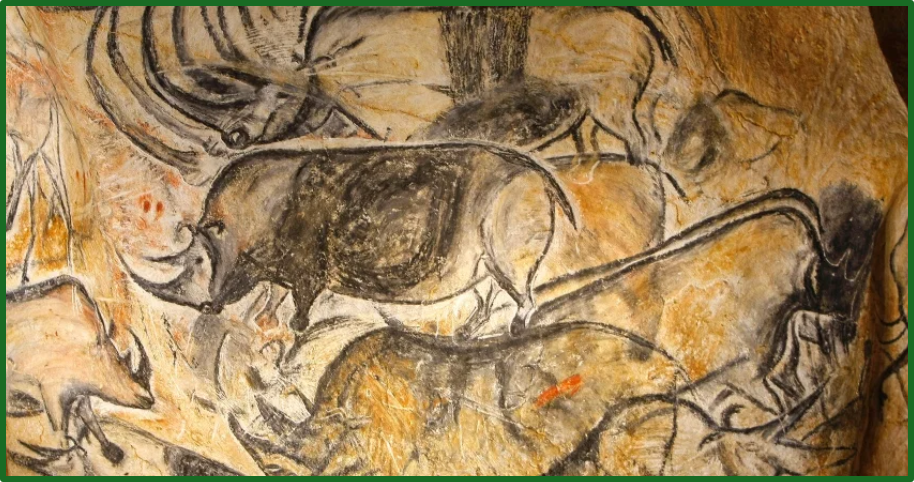
Chauvet Cave France: 37,000 to 28,000 years ago.
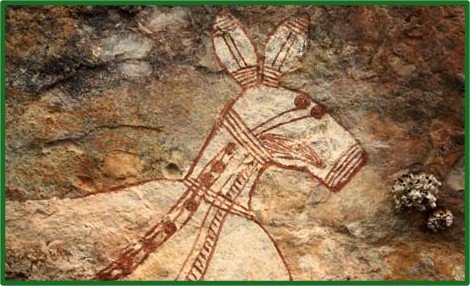
X-Ray Art, Australia: Approx 4,000 years ago
Found in 2025 in the Hohle Fels Cave in Germany where an ancient flute was previously found. Science News, July 2026; about 40,000 Years old. Possibly the same artist? Stratigraphic context and radio carbon dating of organics found in the same layer as the birds. Another example of advanced, complex human behavior.
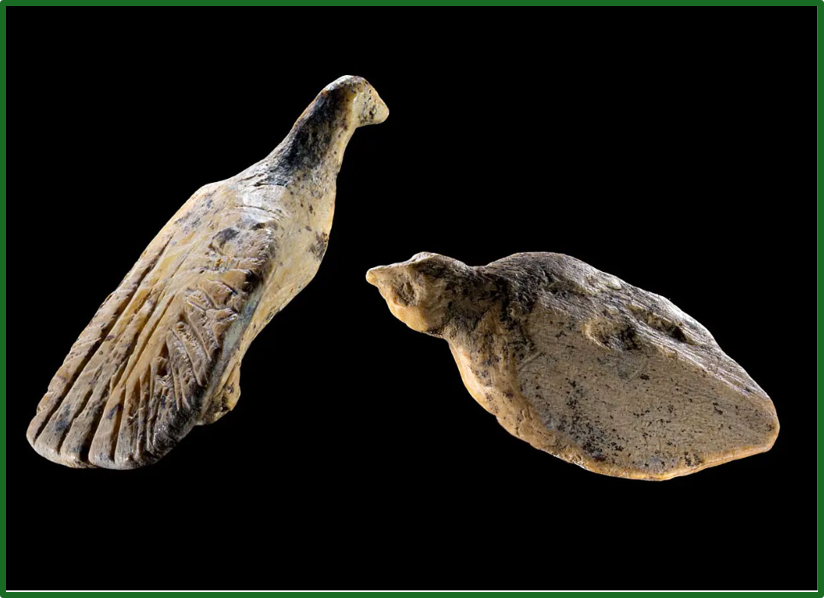
Paleolithic carved birds, Germany
The Origin of Dogs
An ancient puppy, buried with a human, was dated via nuclear DNA, revealed to be a true dog, not a wolf. Date is 15,800 plus years go. The puppy had been fed fish as was true of the humans at the site. Image from the University of Liverpool, UK. Two articles in Nature, March 2026.
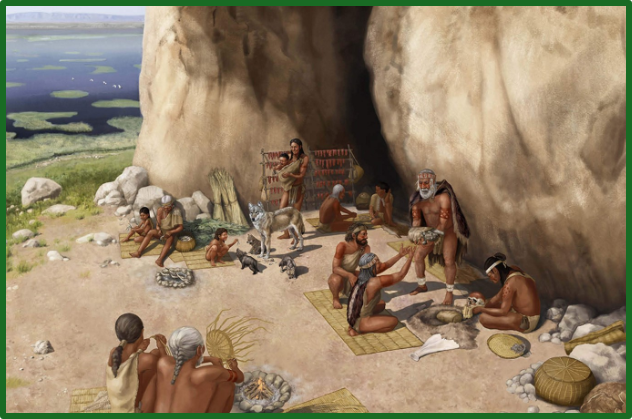
Ancient dogs in Turkey: Pınarbaşı Shelter.
Gough Cave Dog, UK
William March of the UK was working on his PhD program from 2019 to 2023, when he decided to test the jawbone of the Gough Cave canine dated to 14,300 YA. To his surprise, it turned out to be a dog, genetically. Additionally, it is genetically similar to the older dog found in Turkey, mentioned above. (Nature, March 2026, Marsh et al). Marsh also worked on the dog found in Turkey. The conclusion suggested is that there were connections across Europe that included dog ownership, not just bartering food, weapons, art or other communication.
All the dogs tested in both articles, Siberia, East Asia, and the UK trace back to shared ancestor rather than a vanished separate domestication event.
El Jefeciño Mayan site, Quintana Roo, Mexico
The site was reported in 2023-24 by locals to INAH as the Mayan Train Project was being planned through the area. The INAH is the Instituto Nacional de Antropología e Historia (National Institute of Anthropology and History), a Mexican government agency. The Mayan Train Project is meant to open up the economies of distant rural areas, increase tourism, create job and offer transportation across a wide area. There is of course considerable international criticism due to potential historic and environmental damage.
The new site (there are many large Mayan cities) was reported in April, 2026, and initial surveys suggest the city was over 200 acres and contains over 80 buildings, built in a monumental classic Mayan building tradition or Petén style. City flourished between 250 AD to 900 AD. Archaeological surveys and lidar are yet to be done. There are at least 200 major Mayan cities so far found and thousands of structures throughout Mexico not yet surveyed or analyzed. Valeriana, a very large Mayan city, was reported in 2024. It had been surveyed in 2013, but the dataset was not fully analyzed until years later. Over 6,500 ancient structures in and around Valeriana have been reported.
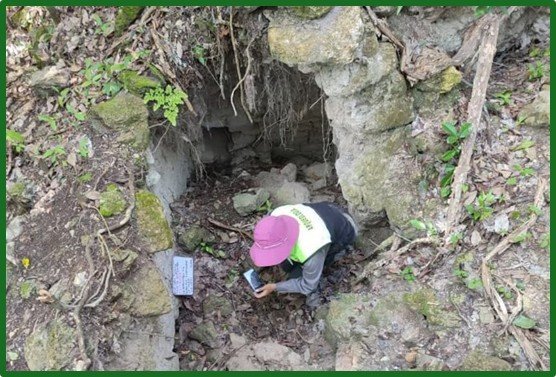
Archaeologist at El Jefeciño site, Mexico
The Calusa of Florida, the Fisher Kings
The Calusa were a remarkable group of non-agricultural indigenous people who lived in a hierarchical society ruled by a king or paramount chief, in addition to a religious leader as well as a military chief. Per the Smithsonian (2020) “Beginning roughly 2,000 years ago, the Calusa enjoyed centuries of dominance as the undisputed rulers of southwest Florida. Theirs was a complex society with trade routes spanning hundreds of miles; a powerful military; and built works including wide canals, islands made of shells and towering buildings”.
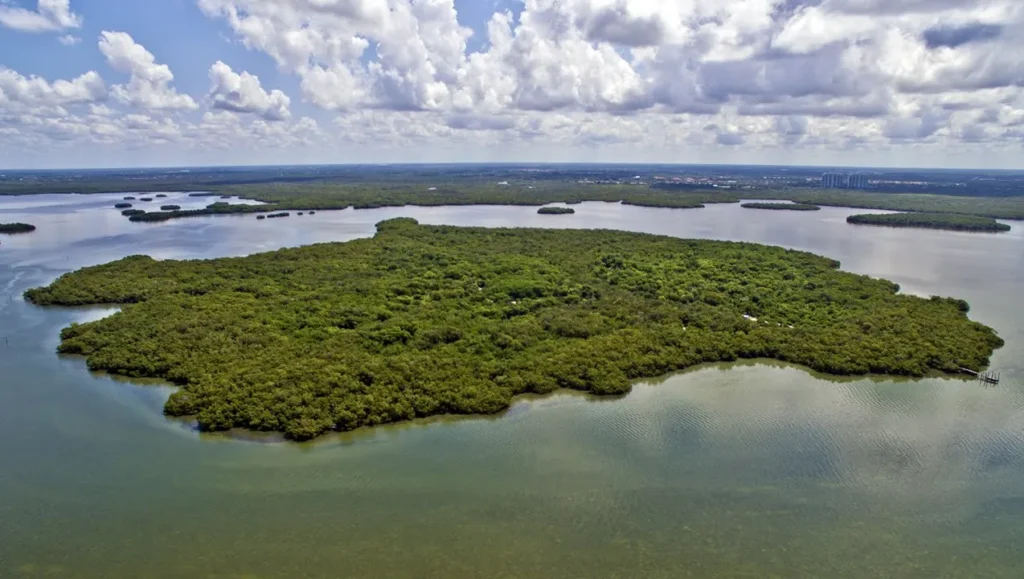
They dominated a wide portion of Southern Florida, and their population has been estimated from 10,000 to 50,000. They are particularly remarkable for their anthropogenic islands. Mound Key, an island of 125 acres, and the best known, was, according to Spanish writings, the home of the king himself. The building was about 80 feet by 65 feet. The island had been created over generations by building on an existing oyster bar, adding bones and shells in the millions, until the island was raised 30 feet above the sea.
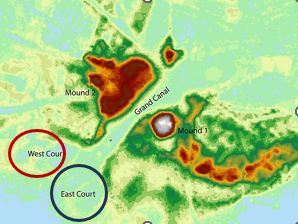
Mound Key had two mounds built on it and a canal through the middle. Despite their long history, after the arrival of the Spanish, the Calusans eventually succumbed to European diseases and warfare with the Spanish and others. In the late 19th century, the Smithsonian sent a group to examine artifacts being reported, discovering remarkable wood sculptures preserved in anaerobic muck.
The astonishing water courts built by the Calusa
“Fish were captured and stored by [the Calusa] in complex walled structures called water courts, constructed of shell and other sediments. These structures were engineered with knowledge of tidal systems, hydrology, and the biology of species to be stored in these courts. This work documents the considerable ability of the Calusa, a nonagricultural society, to engineer systems that significantly alter their natural environment. These structures are associated with an ever-growing population and complex system of governance among the Calusa of Florida”.(PNAS, 2020, Thompson et al). Most early societies accomplishing this kind of hydraulic work and engineering are agricultural societies.